The keys are yours, and the to-do list starts right away. Some tasks are much easier while the house is empty. Others protect your money in the first few months, when new owners are most likely to miss a bill or fall for a scam. Here's a checklist of what to do after closing, in roughly the order it makes sense, with the California-specific steps people tend to miss.
Before you move in
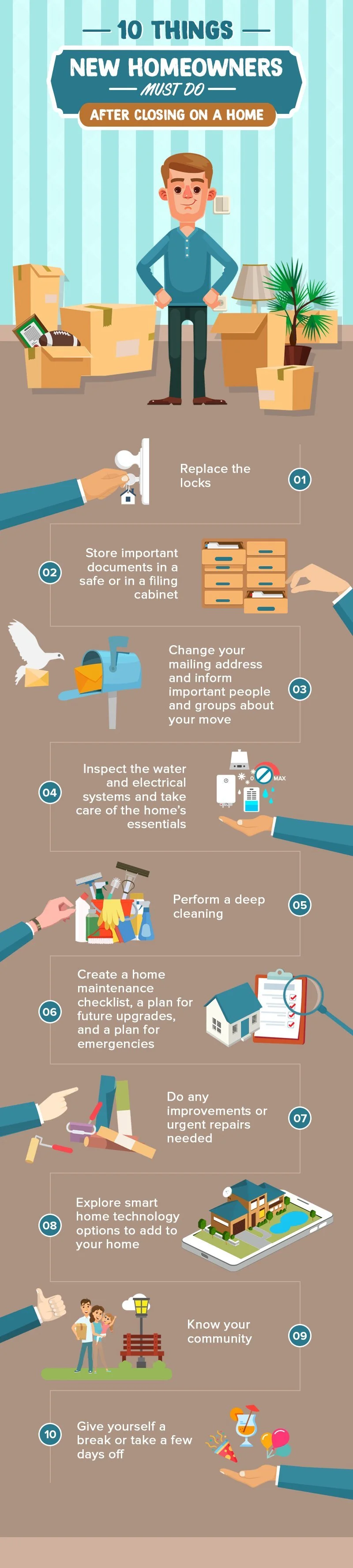
Change the locks and codes. Rekey or replace exterior locks, and reset garage door, alarm and smart lock codes. You don't know how many keys are out there.
Transfer the utilities. Set up electricity, gas, water, sewer, trash and internet in your name, starting on your possession date so nothing gets shut off.
Do the messy projects while it's empty. Painting, refinishing floors and replacing carpet are faster and cheaper without furniture in the way. If the home was built before 1978, follow lead-safe practices before sanding or scraping.
Deep clean. Clean inside cabinets, closets and appliances before your things go in. Many buyers hire this out.
Check safety basics. Test smoke and carbon monoxide alarms, confirm the water heater is strapped and find the main water, gas and electrical shutoffs. California requires both kinds of alarms in most homes.
Update your address. File a change of address with the post office and update your bank, employer, DMV, insurance and voter registration.
In the first month
File for the homeowners' exemption. If the home is your primary residence, file with your county assessor. In California, it reduces your assessed value by $7,000, a small but permanent savings on your property tax bill. Contra Costa and Alameda County assessors both accept the form, and it's free.
Plan for property taxes and the supplemental bill. If your taxes aren't paid through an impound account, put the due dates on your calendar. Either way, expect a supplemental tax bill from the county after closing. It covers the difference between the old assessed value and your purchase price, and it usually isn't paid from your impound account, so set money aside.
Know when your first mortgage payment is due. It's usually the first of the month after a full month has passed since closing. If your loan is transferred to a new servicer, you'll get notice from both companies. Confirm any change by calling the number on your statement, not a number in an email.
Ignore paid deed-copy mailers. New owners in California often get official-looking letters offering a copy of their deed or a property profile for a fee. Your deed is recorded by the county, and you can get a copy from the county recorder for much less.
Store your closing documents. Keep the final Closing Disclosure, deed, title policy, inspection reports and disclosures in one place, with a digital copy. You'll want them for taxes, a refinance or a future sale.
If you sold a home to buy this one
Keep the settlement statement from your sale. You'll need it at tax time. Many owners can exclude up to $250,000 of gain, or $500,000 for married couples filing jointly, if they meet the ownership and use rules. Your tax preparer will want the numbers.
File any tax base transfer claim. If you're 55 or older, or otherwise eligible, and plan to carry your old property tax base to this home under Prop 19, make sure the claim is filed with the county assessor. It doesn't happen automatically.
Close out the old home. Cancel utilities and insurance on the home you sold once escrow has closed, and forward your mail.
In the first year
Review your insurance. Confirm your homeowners coverage is enough to rebuild, and decide whether you want earthquake coverage, which standard policies don't include.
Build a maintenance schedule. Use your inspection report as a starting list: gutters, furnace filters, smoke alarm batteries, irrigation and any items the inspector flagged. Here's how long major appliances and systems usually last.
Register warranties. Register appliances and keep the details of any home warranty that came with the purchase.
Keep an emergency fund. Something will need fixing, and it's easier when the money is already set aside.
Hold off on big new debt. A new car loan or large credit balance can make it harder to refinance later.
For the common money and planning mistakes new owners make, see mistakes to avoid after you buy, and for ongoing costs, the hidden costs of homeownership.
What to do next
Print this list and work through it in your first few weeks. Thinking about your next move or helping a friend with theirs? You can search homes across the East Bay anytime.
Questions about your property taxes, your loan or a future refinance? Call or text 925-876-0876, or reach us here.
Pacific Residential Partners | NMLS #633518 | DRE #02101650