Housing headlines are written to get clicks, and fear gets more clicks than nuance. Most of those stories are built on national averages. Real estate doesn't work nationally. It works region by region, city by city and often street by street. What's happening in Phoenix or Austin may have little to do with Concord, Pleasant Hill or Vallejo, and two neighborhoods in the same city can behave very differently.
Five big forces shape home prices, and none of them are under a buyer's or seller's control. Understanding them helps you tune out the noise and focus on what actually matters for the home you're watching.
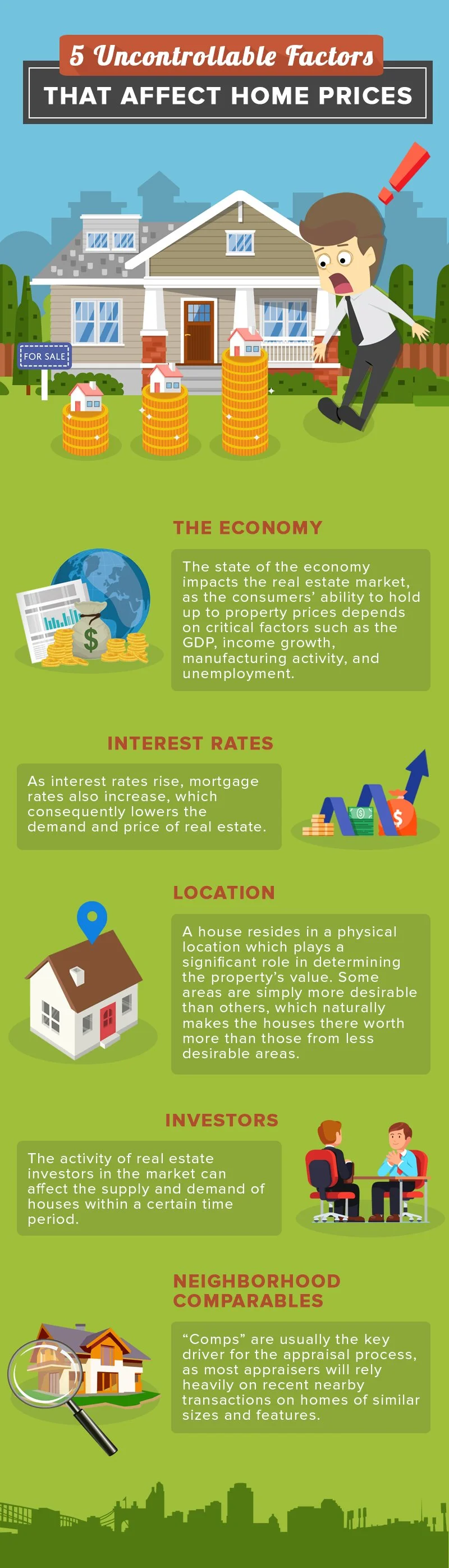
1. The economy
Home prices follow jobs and income over time. When employers are hiring and wages are rising, more people can buy, and demand pushes prices up. When layoffs spread, buyers get cautious and sellers get more flexible.
The East Bay's economy is tied closely to the wider Bay Area, especially tech, health care, biotech and government jobs. Hiring or layoffs in San Francisco and Silicon Valley ripple into Contra Costa and Alameda counties, and the shift toward hybrid work has made commute distance matter less for some buyers and more space matter more.
2. Interest rates
Mortgage rates change how much house a monthly budget can buy, which changes how many buyers are competing at each price point. They also affect sellers. Owners with low rates locked in from earlier years are often reluctant to sell and take on a higher rate, which keeps the number of homes for sale low and supports prices even when demand cools.
Trying to time rates is a guessing game. A better question is whether the payment on a specific home fits your budget today. You may be able to refinance later if rates fall, but that's never guaranteed, so plan around the payment you'll actually have.
3. Location
You can renovate a house, but you can't move it. Location drives value because the things that make an area desirable are hard to replicate: school districts, commute access, BART and freeway proximity, walkable downtowns, parks and views. The Bay Area also has limited land and strict development rules, so new supply is slow to arrive.
In recent years, location has picked up a newer factor too: wildfire risk. California's updated fire hazard severity zone maps and the state's insurance market now affect what homes cost to insure, and that can affect what buyers are willing to pay.
4. Investors
Investors compete with owner-occupants for the same homes, especially entry-level houses, small multifamily properties and homes with room for an accessory dwelling unit. Their activity rises when they can earn a good return on rent and falls when borrowing gets expensive or rents flatten. Where investor demand is strong, first-time buyers often face more cash offers and quicker sales.
5. Neighborhood comparables
On any single home, the most direct influence on price is what similar nearby homes have actually sold for. Appraisers rely on recent closed sales of comparable homes in size, age, condition and location, and buyers and sellers do the same, whether they realize it or not. A home priced well above its comparables tends to sit, and an appraisal that comes in low can force a renegotiation. Here's more on what an appraiser looks at.
Comparables include the neighborhood itself. Nearby sales, the condition of surrounding homes and even what your neighbors do with their properties can all play a part. See ways your neighbors can affect your home's value.
How to read your local market instead of the headlines
When you want to know what a market is really doing, look at a handful of local numbers for the specific area and price range you care about:
Supply compared with sales. How many homes are for sale compared with how many sell each month. Under roughly three months of supply usually favors sellers. Above roughly six usually favors buyers.
Days on market. How long homes sit before going into contract. More on why days on market matters.
Price cuts and seller credits. When more sellers are reducing prices or offering credits, buyers have more room to negotiate.
Closed prices, not list prices. What similar homes actually sold for, and how close those sales came to the asking price.
If you're selling to buy, remember that the same market is working on both sides of your move. A hot market helps your sale and makes your purchase more competitive. A slower one does the reverse. The order of your steps often matters more than the market itself.
What to do next
Pick the areas you're actually considering and watch those numbers for a few weeks. You'll learn more than any national headline can tell you. When you're ready, search homes across the East Bay and watch how listings in your price range actually behave.
Want a read on what's happening in a specific city or neighborhood? Call or text 925-876-0876, or reach us here.
Pacific Residential Partners | NMLS #633518 | DRE #02101650